
One of the most common pieces of writing advice is to “write what you know,” a quote often attributed to the great Mark Twain. So, it’s no surprise that I dreamed up an aspiring naturalist to be the main character of my first MG manuscript. Having worked as an environmental educator, and for the National Park Service, it feels, well, natural. But before all that, I too was a young girl with a pocket full of rocks and feathers. And like Helena Oakwood, my blue-green eyes have a habit of scanning the ground in search of movement or a little magic.
In order to filter the narration of my manuscript through my young naturalist’s eyes, I utilized imagery and figurative language inspired by nature. I also took special care to build a vivid world that highlighted the wild aspects of the setting. During the writing process adventures with my own backyard wildlife greatly enriched my prose.
While I call the Pineywoods ecoregion of Texas home, Helena hails from the Cross Timbers ecoregion near the Lampasas Cut Plain. The Cross Timbers region is a section of woodlands dividing the plains to the east and west. These thick woodlands were often referenced by early travelers as a barrier. The Lampasas Cut Plain is a subregion of the Cross Timbers near the Edwards Plateau, aka the Texas Hill Country. This area is marked by rugged limestone escarpments and buttes. It’s amongst these rocky woodlands that The Summer of Moons & Monsters takes place.
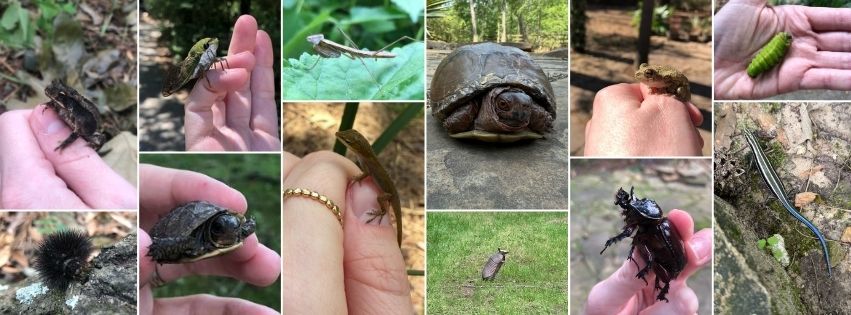
Owls, snakes, armadillos, turtles and more make appearances in the manuscript, and a few are even species I encounter here in the Pineys. However, most are species unique to the more arid regions of Texas. Nevertheless, my backyard has delivered boundless joy and inspiration for a writer and naturalist over the years.
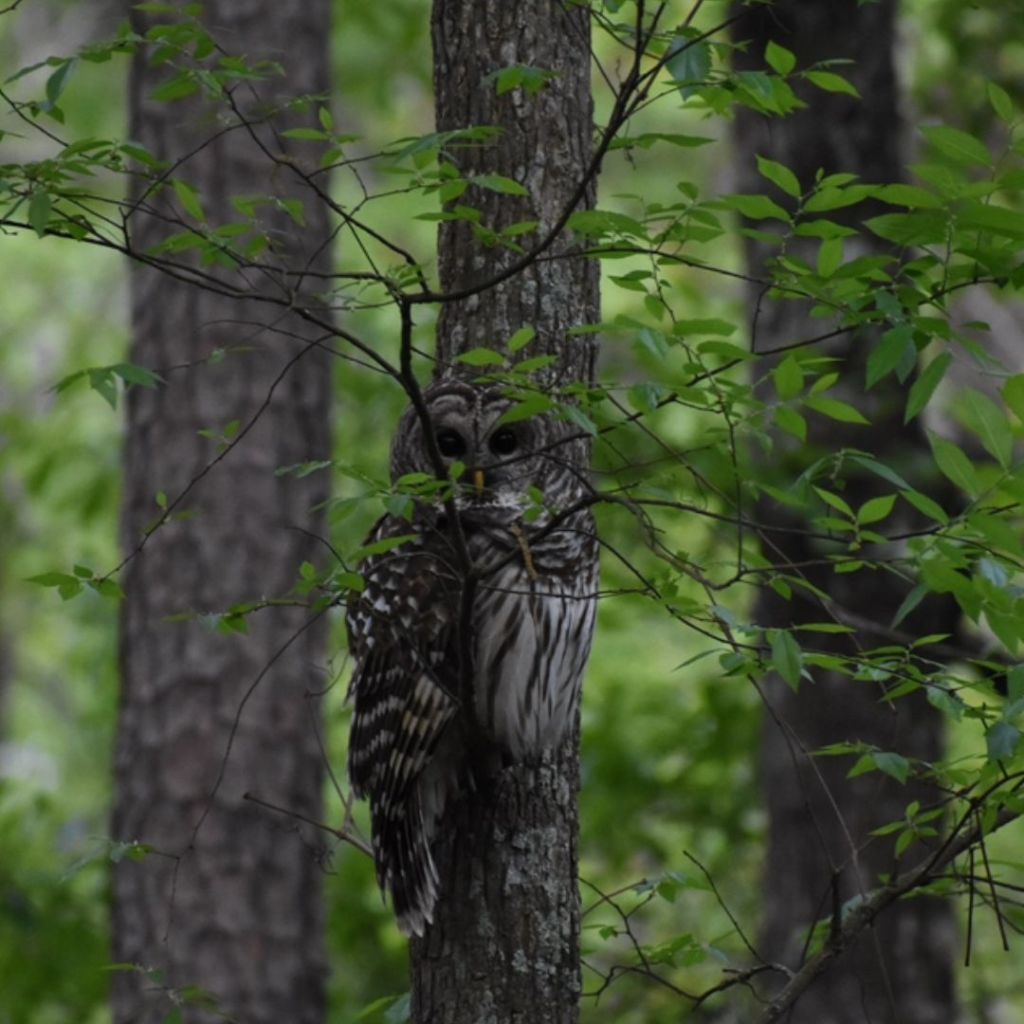
My favorite visitors are probably our resident barred owls. Without having the mates sat alongside each other to compare sizes (females are larger), I never know if I’m looking at a male or female. What I do know is that they love a crunchy crawfish snack after a good rain. Watching the barred owl hunt in the side yard is one of the few writing distractions I welcome. But pie works too. Although, I have grown remarkably adept at juggling a slice of pie while typing.
Barred owls are considered the most vocal of the North American owls and can be identified by their call, who-cooks-for-you. They’re home bodies, commonly staying within six miles of their nesting site. Young barred owlets are known to climb trees using their claws and beaks.


The barred owls are far from my only avian visitors. Sometimes these visitors get a little ahead of themselves and fly into the window. Most of the time they shake it off but occasionally they lay around stunned and probably slightly concussed. That was the case with the Tufted Titmouse above. Once he was ready to leave my finger, he made a lap, and came back to a nearby branch to serenade me.
Titmice rely on open cavities like those found in dead trees to nest. They often line the nests with hair plucked straight from the source. Hair from racoons, livestock, opossums, and humans has been identified in their nests. Unlike woodpeckers, they like to shell the seeds they forage before hiding them in trees for later.

Every year Red-bellied Woodpeckers take advantage of the birdfeeders alongside the titmice and others. They use the feeders and surrounding trunks as a classroom to teach their young how to locate and hide food. My favorite part of this is the short period when the chicks are still covered in downy fuzz and look much bigger than the adults feeding them.
The woodpecker at the top was another victim of the window and was almost on the receiving end of some over-zealous canine affection. Take a look at that barbed tongue! Perfect for digging insects and other goodies out of wood.
Red bellied-woodpeckers can stick their tongues out two inches past their mouths and have sticky saliva that helps them trap insects. These birds can sometimes be seen flying erratically through woodlands, flitting sharply, changing direction, and chattering. It is believed the birds do this to teach evasive flying maneuvers to their young.

In a manuscript about tracking down a legendary river monster, I found myself returning to serpents for inspiration again and again. This blue beauty is a Buttermilk Racer, one of eleven Racer subspecies. These guys are only found in parts of Texas, Louisiana, and Arkansas. Capable of reaching up to five feet, they’re nonvenomous (although they have a reputation for being bitey!), and known to lay eggs communally with other species.
Inspiration is all around us. Sometimes you just need to lift up a log or look where you’re stepping to find it!
What have you found in your backyard?
 Victoria Tatum
Leave a comment